
Rescue Dog Behaviour Training

There are different reasons why dogs are brought to rescue centres. They can range from rescue centres removing dogs from a home due to neglect or abuse, dog owners being unable to cope with the dog’s behaviour or the dog’s owner has passed away. Many dogs that are brought to rescue centres have made traumatic experiences that make it very difficult for such dogs to trust humans. Additionally, the traumatic experience of being rehomed and entering an environment that is very noisy and has very high activity levels can lead to the dog feeling threatened and alienated which can lead to increased levels of fear and resulting in a myriad of unwanted behaviours, for example, hyperactivity, excessive barking, excessive chewing, aggression and many other unwanted behaviours.
This is especially the case for dogs who have been through several unsuccessful rehoming attempts, so called Yo-yo dogs. In these cases, the dogs are even more desperate to find a home in which they are respected, accepted and loved. Yo-yo dogs have even greater levels of anxiety and desperation because they do not understand why they are repeatedly returned to the shelter.
Successfully rehoming any rescue dog requires to see the world from the dog’s perspective. It is important to know that every dog lives only in the moment. In a shelter situation, the dog does not know that this situation is temporarily only. Additionally, the dog does not understand that the very behaviour, the unwanted behaviour, which has been unintentionally positively reinforced by the previous owner is the very behaviour that causes the new owner to bring the dog back to the shelter if he finds himself unable to deal with the challenging behaviour of the dog. And since the unwanted behaviour has been unintentionally rewarded, the Yoyo dog keeps doing the unwanted behavior because it is convinced that that is exactly the behaviour the owner wants. That leaves the Yoyo-dog even more confused as to why it is returned to the shelter. Added to this is the dog’s frustration about the repeated return to the shelter and when rehomed again it tries even harder to please the new owner. This vicious cycle then continues on if the new owner sends again the wrong signals to the dog. To break this cycle the right signals need to be send to the dog. These principles apply to all dogs, not just to rescue dogs.
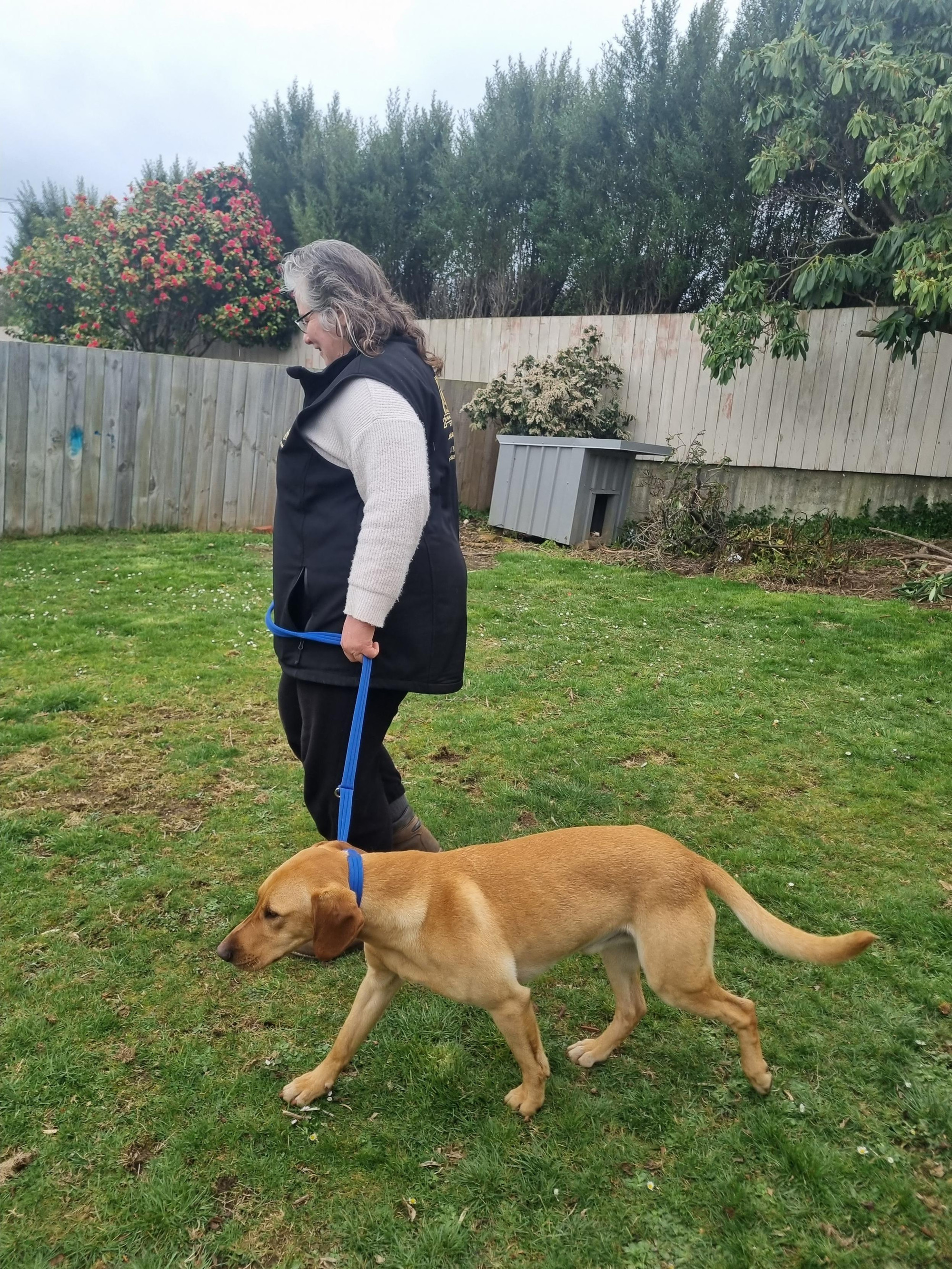
So, then, what are the right signals?
To find the answer to this question, we need to look at the wolf pack and how the Alpha pair, the Alpha male and the Alpha female, lead their pack. Dogs have descended from the wolf. As we humans have our language by which we communicate, so have dogs, a language, -wolf- that unites them all, enabling them to communicate effectively with each other. In this context, it is crucial to understand the leadership structure within a wolf pack; the foundational pillars of leadership by which the Alpha male and the Alpha female lead their pack. The structure within a wolf pack is hierarchical. Deeply anchored in the dog's mind is that there must be a leader in a pack. While our domesticated dogs have been removed from the wolf pack, the wolf has not been removed from the dog. It means that the domesticated dog still has its wolf-mindset! At the very core of their being, the domesticated dog is still a wolf, even if it does not look like one!
Translated into the domestic situation and applied to the human/ dog relationship, this means that the leadership signals the Alpha male and the Alpha female send to their pack members to establish and maintain their leadership status need to be the same in the domestic situation. Since there has to be a pack leader in the dog's mind, the dog will assume leadership when it does not get the right leadership signals from its owner. A plethora of behavioural issues arise when dogs adopt leadership thinking and act accordingly as dogs cannot cope with the responsibility of looking after the human pack in an environment it does not understand and does not know how to live in. Applying the foundational pillars of leadership will enable you, the dog owner, to effectively communicate with your dog in a language your dog understands -wolf.
It will help you to build the trusted relationship with your dog that you have longed for so long.
Rescue dog training fee: $160.00 per session
Preferred payment method is cash. Thank you!
Contact expert dog trainer Dunedin, Paws4Success, today to transform your rescue dog.